
Why Should New Clothes Be Washed Before Wearing?
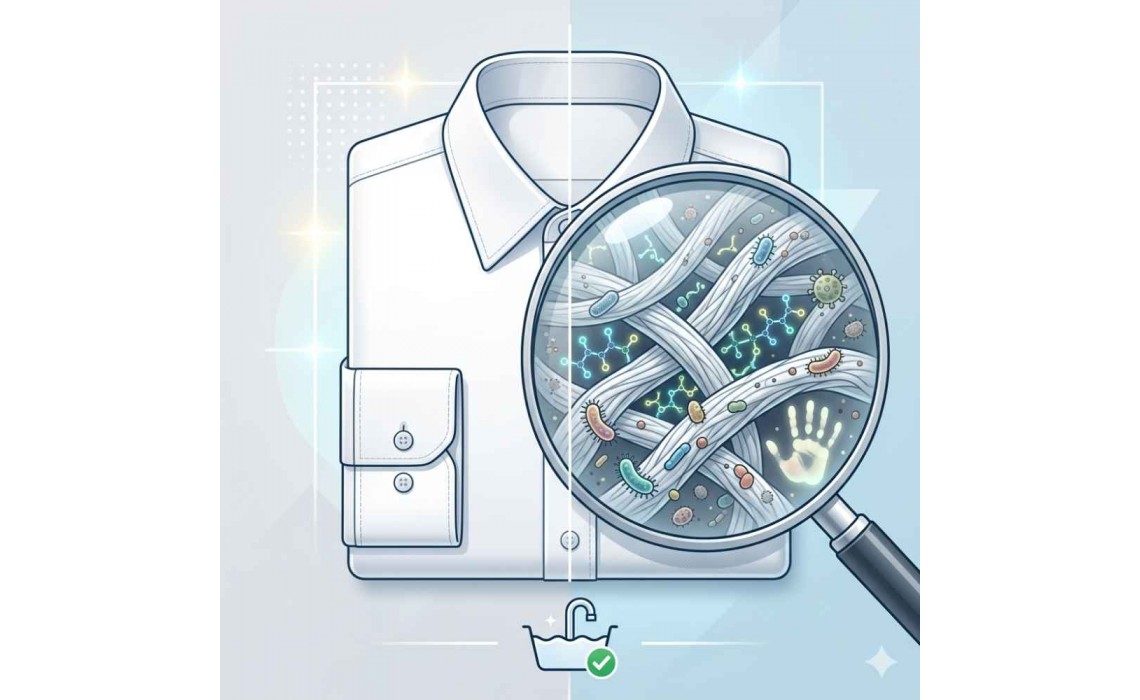
Most consumers tend to wear new clothes immediately after purchase, assuming that “new” means “clean.” However, from the perspective of textile manufacturing and public health, this habit may involve certain risks.
In fact, before a piece of clothing reaches consumers, it goes through multiple stages, including raw material processing, production, dyeing and finishing, packaging, and sales. During this process, it may retain chemical residues, absorb environmental particles, and come into contact with many people. Therefore, washing new clothes before wearing them is not unnecessary; it is a basic health management practice.
2. Why Do International Standards and Experts Recommend Washing Before Wearing?
3. Proper Washing Principles for New Clothes
4. Reducing Potential Risks Through Consumer Choices
5. Conclusion: Washing New Clothes Is a Basic and Necessary Health Practice
6. FAQ: Common Questions About Washing New Clothes
1. Potential Risks of Wearing New Clothes Without Washing
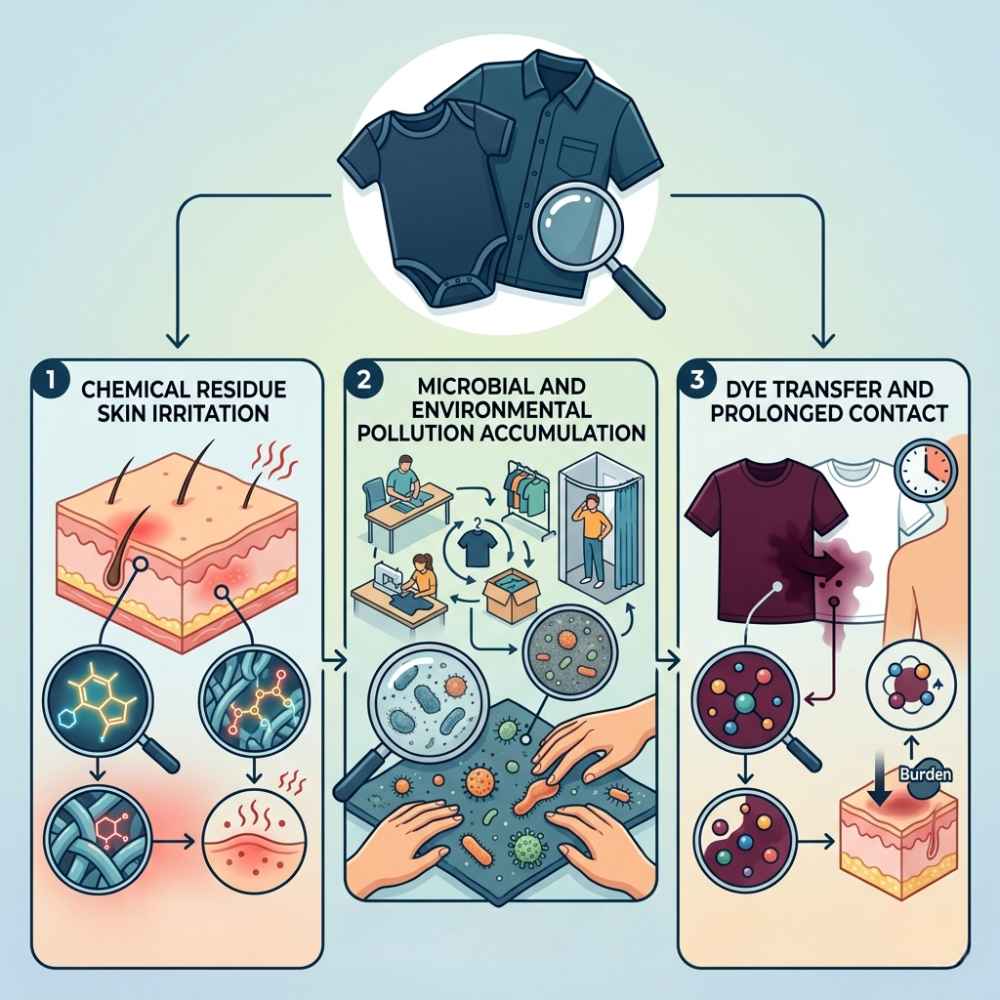
Risk of skin irritation from chemical residues
During textile processing, common chemical treatments include dyeing, shaping, wrinkle resistance, and antibacterial finishing. These processes may involve formaldehyde-based resins, azo dyes, or other additives. Even if a product meets safety standards, trace residues may still remain. For the general population, the impact may be limited, but for people with sensitive skin, or infants and young children, these residues may cause contact dermatitis, redness, swelling, or itching.
Accumulation of microorganisms and environmental pollutants
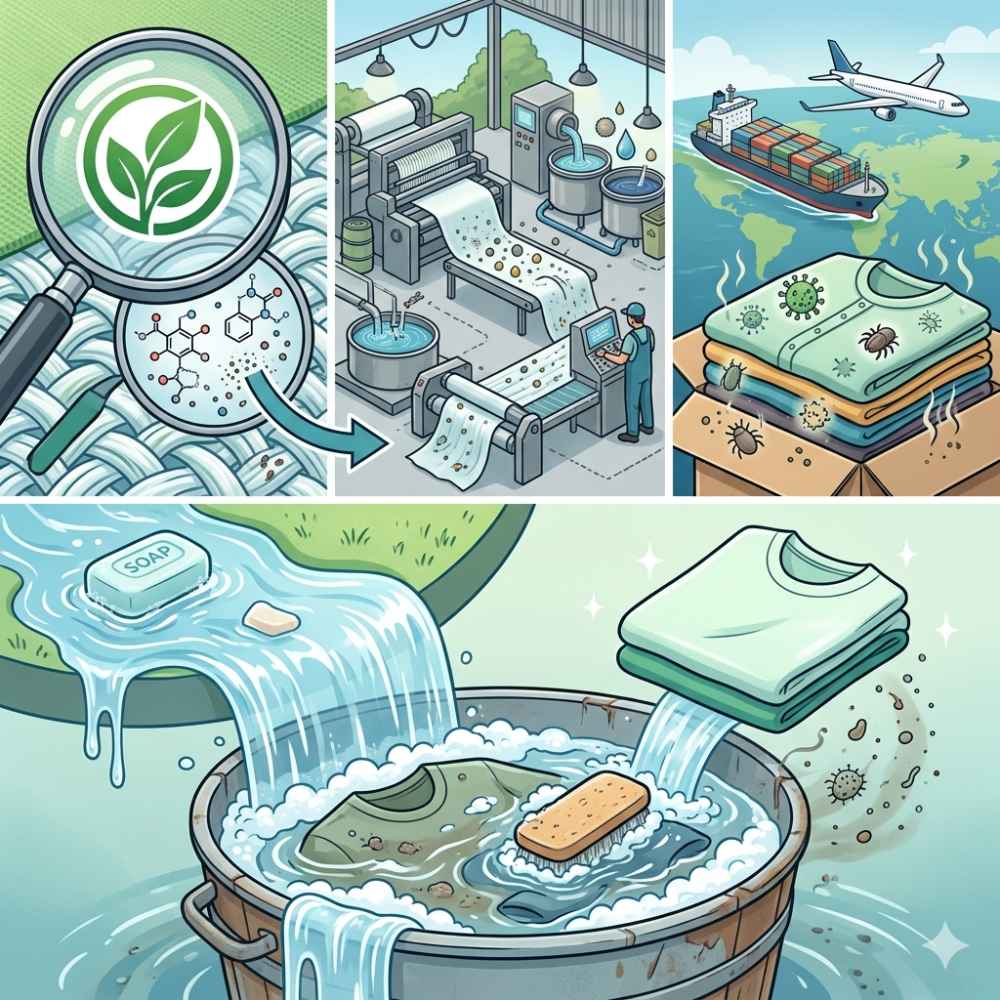
Clothing is not produced or distributed in a sterile environment. During cutting, sewing, and packaging, fabrics may come into contact with dust, microorganisms, and industrial residues in the air. In retail settings, clothing may also be tried on multiple times, increasing the chance of contact with human skin, sweat, or microorganisms. Therefore, even if a garment looks clean, it does not necessarily mean it is hygienic.
Dye transfer and effects of prolonged contact
Some dark-colored or highly saturated garments may still release unfixed dyes during their first use. These dyes may not only stain other clothes but may also adhere to the skin surface during prolonged contact, placing a potential burden on the skin.
2. Why Do International Standards and Experts Recommend Washing Before Wearing?
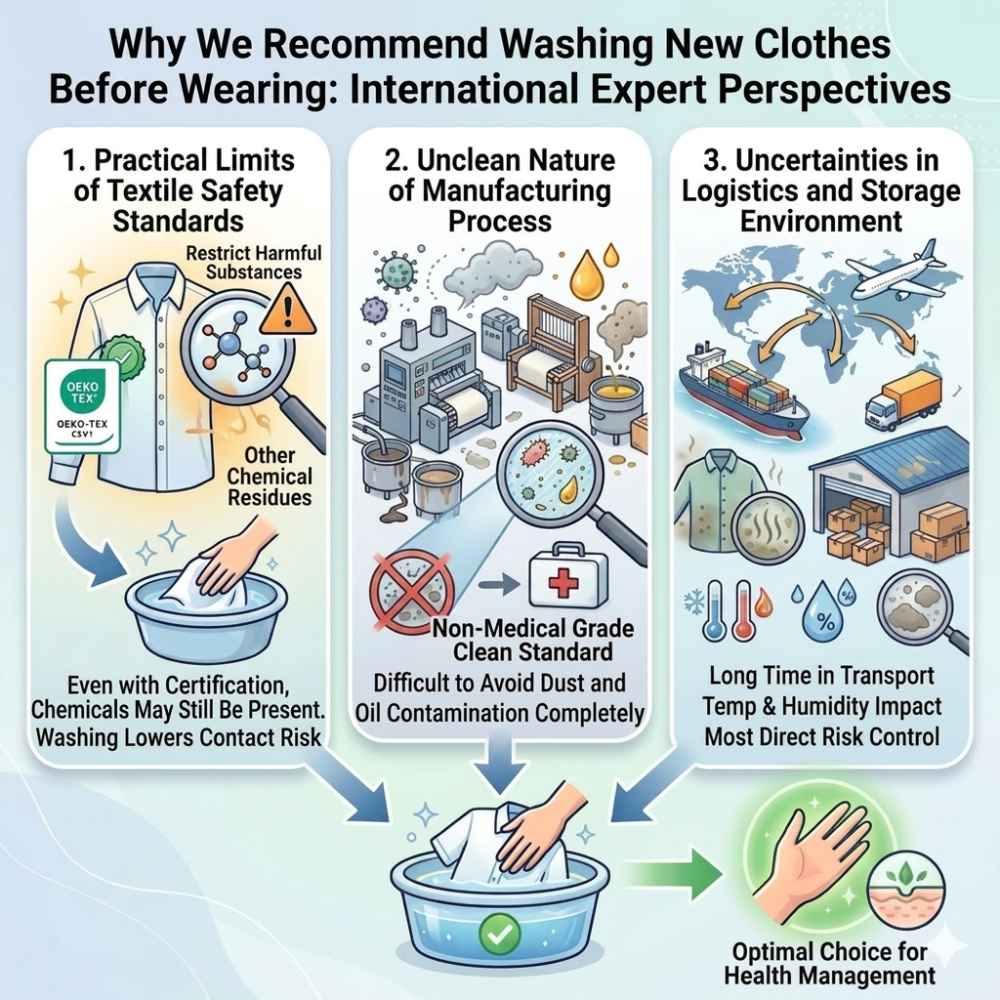
Practical recommendations from textile safety standards
International textile certification systems, such as OEKO-TEX, mainly focus on limiting the amount of harmful substances rather than completely eliminating all chemical components. Therefore, even if a product is certified, consumers are still advised to wash it before first use to reduce the chance of direct skin contact with residual substances.
The non-clean-room nature of manufacturing processes
The textile industry operates in an open production environment. From raw material handling to finished garment production, clothing passes through many processes and comes into contact with different equipment. It is difficult to completely avoid the attachment of dust, oils, or fine particles. As a result, finished garments do not meet medical-grade cleanliness standards.
Uncertainty in logistics and storage conditions
In the global supply chain, garments may go through long periods of transportation and multiple storage locations. Changes in temperature and humidity, packaging materials, and storage conditions can all affect the smell and cleanliness of clothing. Washing new clothes after purchase is the most direct and effective way for consumers to reduce potential risks.
3. Proper Washing Principles for New Clothes
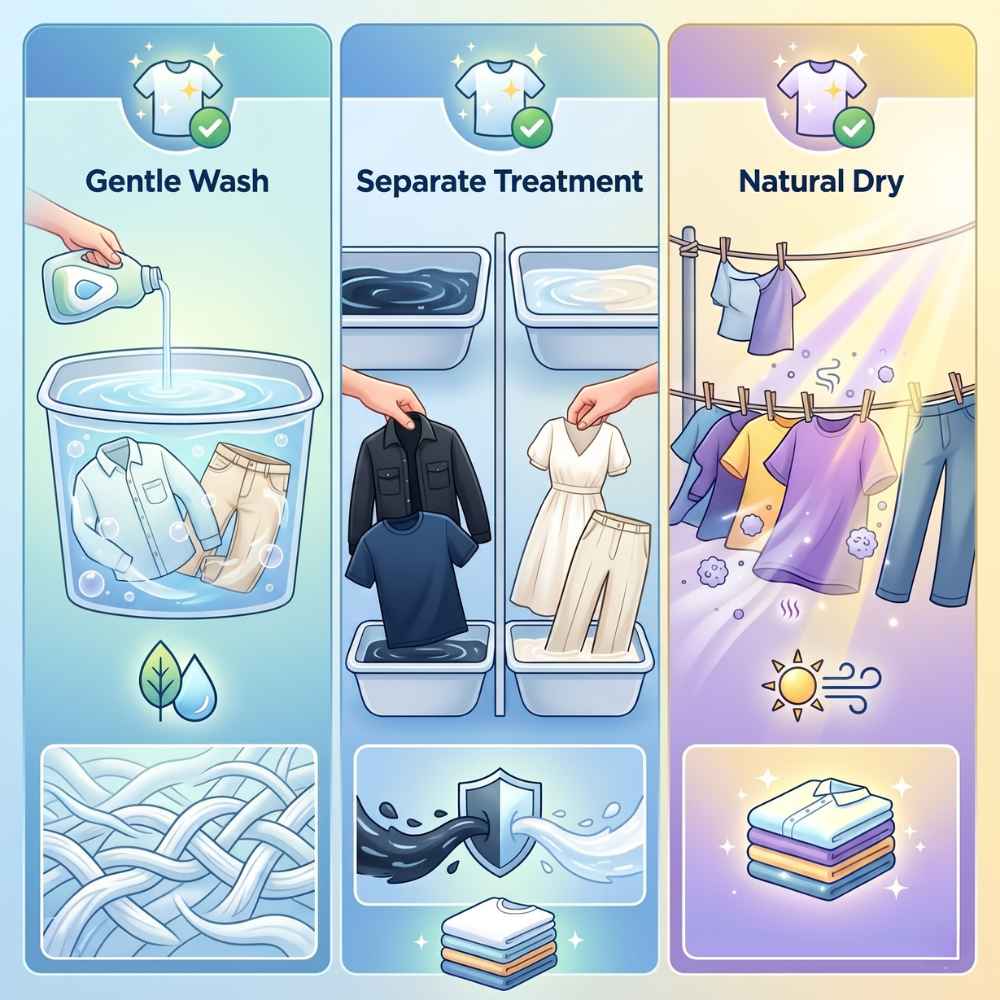
Choose a mild detergent to reduce irritation
It is recommended to use a neutral or hypoallergenic detergent and avoid products with strong stain-removing ingredients in order to reduce irritation to both the fabric and the skin.
Wash separately to prevent dye transfer
New clothes should be washed separately from existing garments, especially dark-colored and light-colored items, to prevent dye transfer and secondary contamination.
Air-dry naturally to help volatile substances dissipate
Natural air-drying helps release residual odors and volatile substances while avoiding heat damage to the fiber structure. Under moderate sunlight, ultraviolet rays may also provide some antibacterial effects.
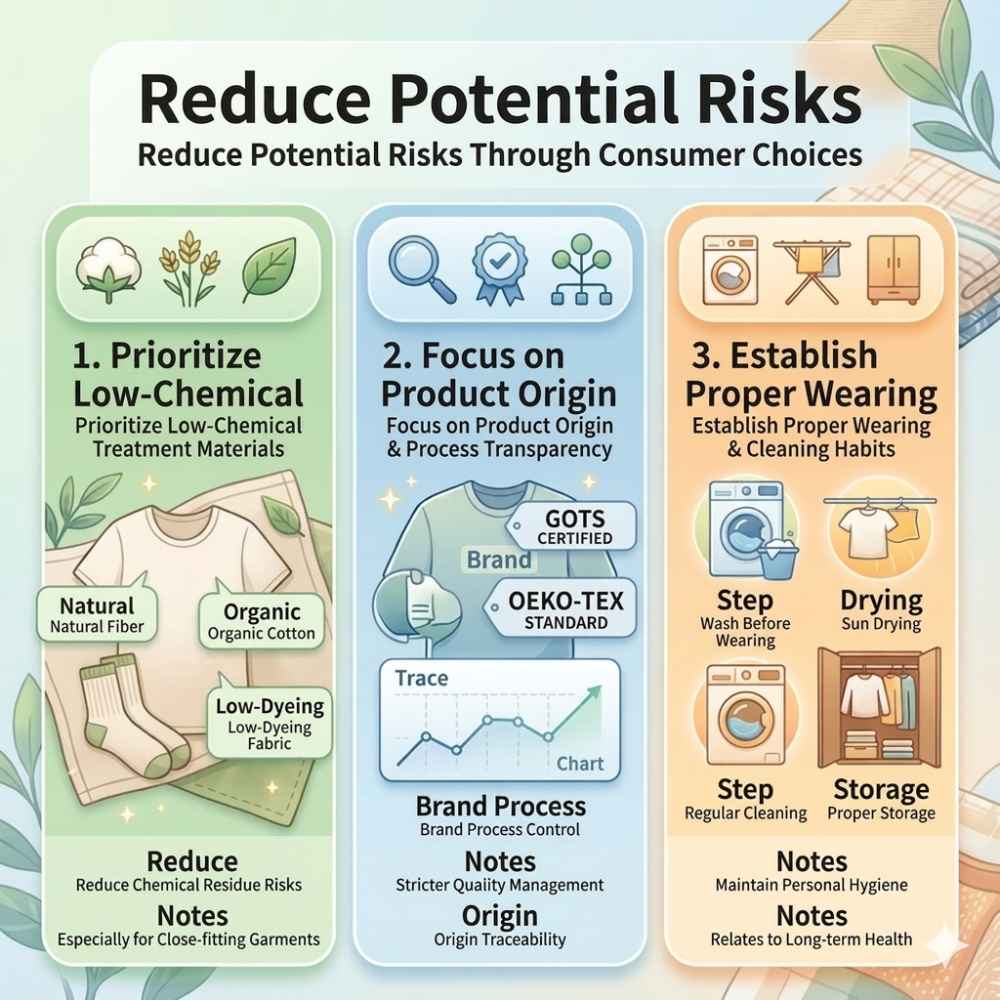
4. Reducing Potential Risks Through Consumer Choices
Prioritize materials with fewer chemical treatments
Natural fibers, organic cotton, and fabrics with low dyeing and finishing treatments generally carry a lower risk of chemical residue. This is especially important for clothing worn close to the skin for long periods.
Pay attention to product sources and process transparency
Brands with complete labeling and certifications are often more rigorous in process control and quality management, helping to reduce unnecessary risks.
Build proper wearing and cleaning habits
Good clothing management habits, including washing before first use, regular cleaning, and proper storage, are important parts of maintaining personal hygiene. This is not only about appearance but also closely related to long-term health.
5. Conclusion: Washing New Clothes Is a Basic and Necessary Health Practice
Considering textile manufacturing processes, environmental exposure, and the risks of human contact, washing new clothes before wearing them is a reasonable and necessary preventive measure. It can effectively reduce chemical residues and microbial risks while improving comfort and overall hygiene.
Starting with the simple habit of “wash before wearing,” we can build better clothing habits and choose products that are friendlier to both the skin and the environment. This allows us to enjoy a lifestyle that is both comfortable and reassuring.
6. FAQ: Common Questions About Washing New Clothes
Q1: Do new clothes have to be washed before wearing?
It is recommended to wash them first to reduce the risk of chemical residues and bacterial contact, especially for close-fitting clothing and people with sensitive skin.
Q2: If I only wear new clothes once, can I skip washing them first?
It is not recommended. Even short-term wear may still expose the skin to residual substances and increase the risk of skin discomfort.
Q3: Do all materials need to be washed?
Most materials are recommended to be washed, especially garments that directly touch the skin.
Q4: What should I pay attention to during the first wash?
Use a mild detergent, wash with cold water, and wash new clothes separately to reduce the impact of dyes and chemical residues.
Q5: Do certified safe garments still need to be washed?
Yes. Even if a garment has certifications such as OEKO-TEX, washing is still recommended to remove contaminants from transportation and handling.
Q6: Does the smell of new clothes mean they are unsafe?
The smell often comes from processing additives and does not necessarily indicate harm. However, washing and ventilation are recommended to reduce residues.
References
1. OEKO-TEX, STANDARD 100 Textile Safety Standard.
2. U.S. Environmental Protection Agency, information on formaldehyde and environmental exposure.
3. American Academy of Dermatology, information on contact dermatitis.
4. Centers for Disease Control and Prevention, recommendations on personal hygiene and cleaning.
Related products
/A0502/A0502-4-262x334.jpg "Quality Celestial Clothes Dress \"Shining Star\" Customized Product A0502【Celestial Cloud】")
/A0502/A0502-4-334x334.jpg "Quality Celestial Clothes Dress \"Shining Star\" Customized Product A0502【Celestial Cloud】")
PRODUCT DETAILS Stock ID: A0502 Name: Shining Star Material: Dress surface cloth: cotton & artificial silk. Dress inner lining cloth: cotton WEIGHT Subject to shipped product. CARING - Washable, water temperature below 40℃. - Use neutral detergents. - Can spin dry. - Do not bleach. - Do not tumble dry. PURCHASE NOTE *Accessories not included. *Please contact customer service before placing an order. The fabric presents a shiny and beautiful texture, and the dignified and elegant waist design naturally shows a women’s beauty. ..
Add to Cart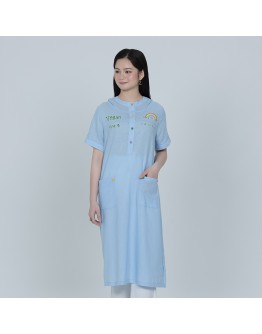

PRODUCT DETAILS Stock ID: A1525 Name: Vegan Slogan "road 2 Heaven" Rainbow Cotton-Linen Short-Sleeve Hooded Dress Slogans: Vegan = road 2 Heaven. 持純素=通往天堂之路 Vegan = protector of the world. 純素者=世界的保護者 Material: 55% cotton + 45% linen CARING • Please use natural, chemical-free detergents to protect the cotton fabric and the environment. • Wash dark and light-colored clothing separately. • Wash with cold water (below 35℃ or 95°F). Do not soak in detergent for a long time. • Do not use bleach or fabric softeners. • When washing by machine, turn the garment inside out and place it in a laundry bag. Use a delicate wash cycle. • When washing by hand, do not wring out the garment after washing. Turn the garment inside out, put it in a laundry bag and place it in the washing machine on a slow spin cycle. • If drying outdoors, turn the garment inside out. Do not leave exposed to the sun for too long in order to maintain the garment’s color. • Do NOT tumble dry. • Do NOT iron directly on the print. Place a thin towel over the print area and iron on the lowest heat. COLOR DISCLAIMER Product pictures are taken of the actual product. There may be slight color differences between the photos and the actual product due to the lighting sources and how they are displayed by your monitor or device. Supreme Master Ching Hai has created a magnificent series of slogan-decorated garments & accessories for the vegan Golden Era. The slogans help to awaken people’s innate benevolent and loving nature, thus opening the Great Gate to a peaceful vegan world! Wearing Celestial Cloud clothes adorned with vegan slogans Emanating Divine Light, Truth, Beauty & Goodness Brightening up the entire Universe You are a hero for promoting World Vegan, World Peace! ..
Add to Cart

