

Blessings Worn Across the World: Traditional Costume Auspicious Motifs of the Five Continents
Throughout the long river of human civilization, clothing has never been merely fabric to cover the body. It is more like a walking canvas, carrying our ancestors' reverence for the universe, their hopes for a better life, and the inheritance of family bloodlines. From the delicate complexity of the East to the classical elegance of the West, and from the expressive colors of Africa to the geometric codes of the Americas, traditional clothing motifs from various countries act as a universal language, requiring no translation, tangibly rendering abstract blessings into threads and prints.
When choosing clothing, modern people are often easily drawn to fleeting fashion trends, overlooking the profound cultural heritage hidden within the texture of the fabric. If we can deeply understand the meanings and symbols of these auspicious patterns, dressing becomes more than just an external decoration—it transforms into a ritual of dialogue with ancient wisdom. Today, let Celestial Cloud take you on a cultural journey around the world to decode the most representative clothing totems of the five continents, exploring the beautiful wishes frozen in time upon these textiles.
2. The Classical Elegance of Europe: The Intertwining of Faith, Nature, and Royal Power
3. The Expressive Vitality of Africa and the Americas: Nature Worship and Geometric Codes
4. An Aesthetic Dialogue Bridging Past and Present: How to Incorporate Exotic Styling Inspiration into Modern Life
5. Conclusion
1. The Complex Beauty of Asia and the Middle East: Continuity of Life and Spiritual Sustenance
Asia and the Middle East are the cradles of ancient human civilizations, where clothing motifs are often closely linked to local religious beliefs, mythological legends, and nature worship. The intricate lines and magnificent colors not only showcase the pinnacle of aesthetic craftsmanship but also convey a powerful yearning for the endless continuation of life.
1.1 Indian Paisley: The Endless Vitality of the Tree of Life
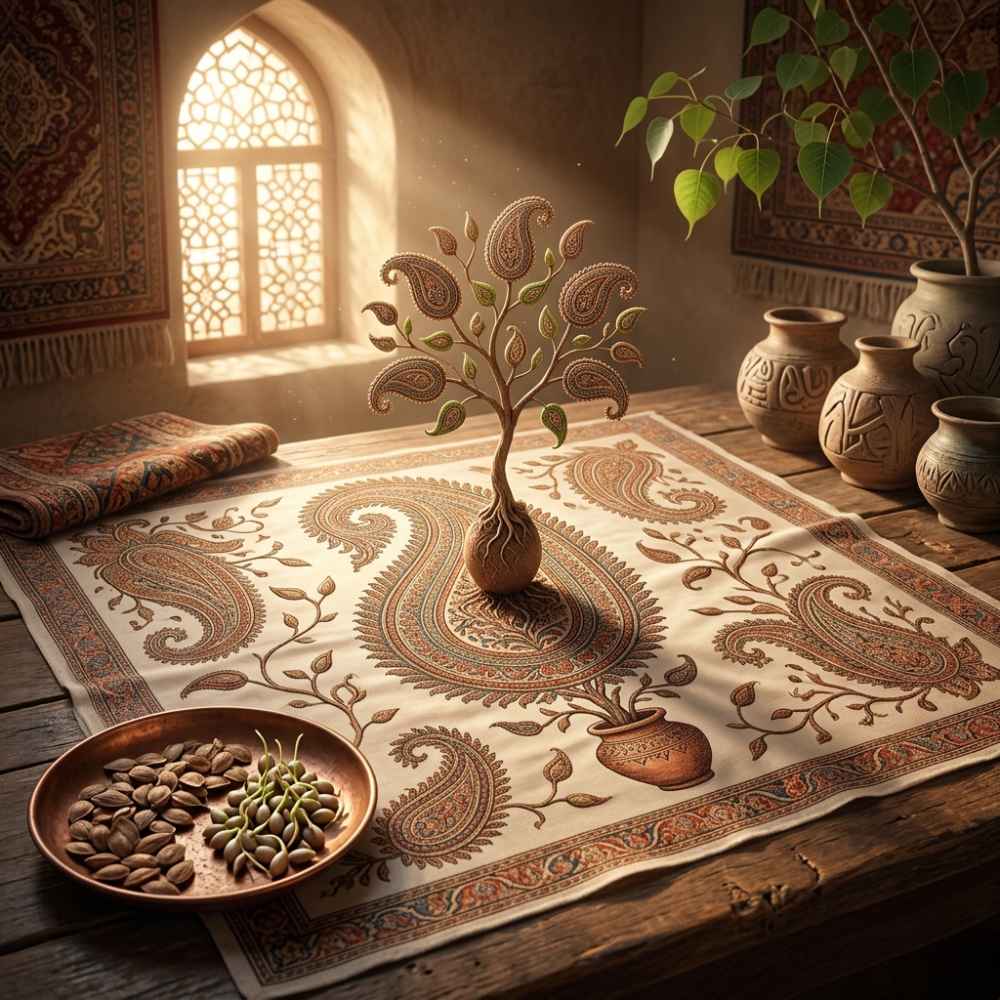
When it comes to the most recognizable exotic prints globally, the "Paisley" motif, which originated in ancient Babylon and flourished in the Kashmir region of India, definitely makes the list. This pattern, shaped like a teardrop, a bodhi leaf, or a paramecium, is called "Boteh" in ancient Persian culture, symbolizing the buds, seeds, and reproduction of the Tree of Life, representing the origin of life and infinite vitality. Through the trade activities of the British East India Company in the 18th century, this motif spread to Europe and was mass-produced in the town of Paisley, Scotland, gaining widespread fame from then on. Today, when we wear silk scarves or blouses featuring the paisley pattern, it feels as though we are draping ourselves in ancient, everlasting blessings.
1.2 Japanese Seigaiha (Blue Ocean Waves): Eternal Waters Praying for Peace
Turning our attention to East Asia, the "Seigaiha" motif in traditional Japanese clothing uses regular, calm, overlapping semicircular lines to sketch an image of infinitely extending ocean waves. This motif originated in Persia, entered China via the Silk Road, and then spread to Japan during the Heian period, where it was initially used on dance costumes for elegant court music (Gagaku). The auspicious meaning and symbolism of Seigaiha lie in the bounty and tranquility of the ocean; those continuous waves signify that good fortune and peace will last eternally, just like the tide. In modern Japanese design, or minimalist pieces, Seigaiha is often transformed into understated geometric textures, bringing a sense of tranquil stability to the wearer.

1.3 Middle Eastern Hamsa (Hand of Fatima): Protective Energy Blocking Misfortune
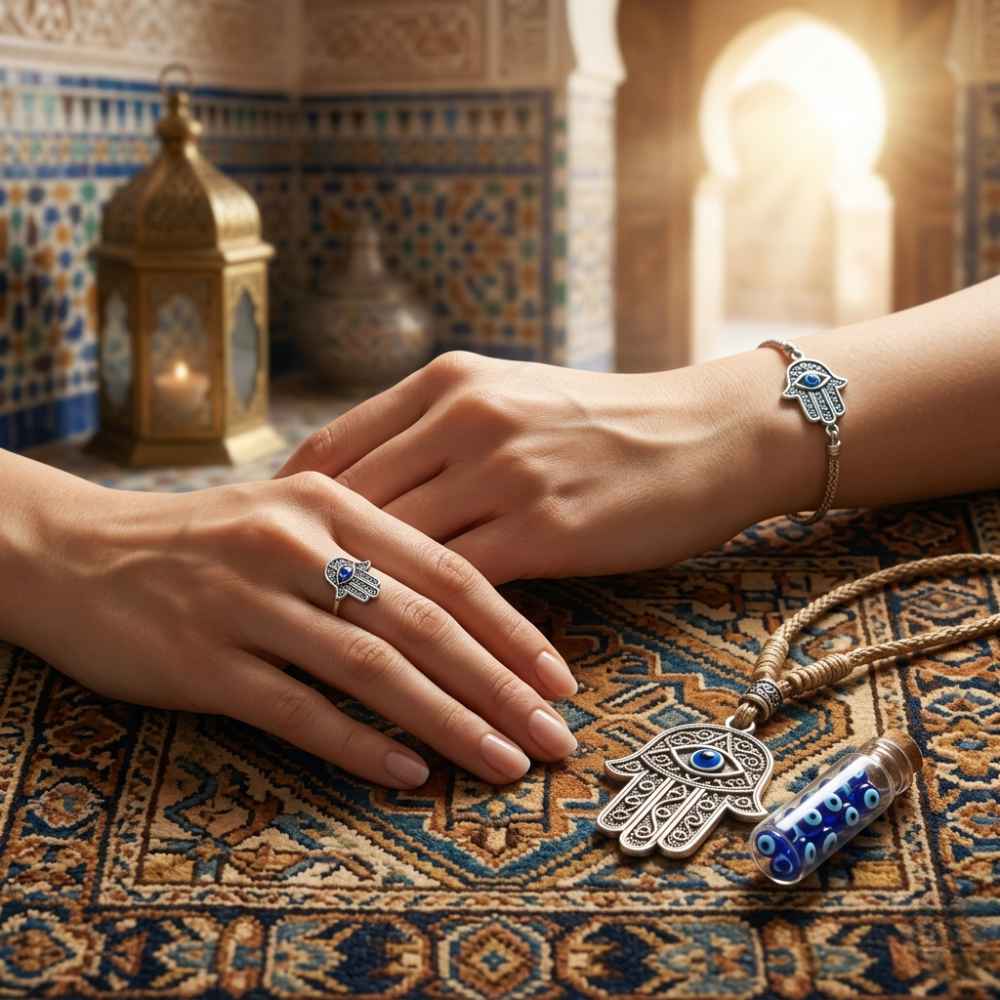
In the mysterious regions of the Middle East and North Africa, the "Hamsa" (or Khamsa), also known as the "Hand of Fatima," is the most common amulet totem. This pattern of a palm with an eye in the center represents Fatima, the daughter of the Prophet Muhammad, in Islam, and is known as the "Hand of Miriam" in Judaism. Regardless of religious beliefs, it represents a powerful defensive force that wards off the Evil Eye, bringing health, wealth, and good luck. Today, the Hand of Fatima is not only frequently seen on traditional woven garments in the Middle East but is also widely applied in modern jewelry accessories and bohemian prints, becoming a top recommendation for protective, luck-bringing apparel sought after by many for spiritual solace.
Having appreciated the complex beauty of Asia and the Middle East, which manifests faith and nature into physical forms, we follow the tracks of history westward. The traditional motifs of the European continent display another kind of elegance, deeply influenced by royal power and classical mythology.
2. The Classical Elegance of Europe: The Intertwining of Faith, Nature, and Royal Power
Traditional European clothing motifs are like a miniature history of Europe. From mysterious Norse mythology to the brilliant French royalty, totems in Europe are not only expressions of beauty but also strict symbols of class, lineage, and faith. These designs, refined by time, remain indispensable sources of inspiration on international haute couture runways today.
2.1 Celtic Knot: Infinitude and Eternity in Norse Mythology
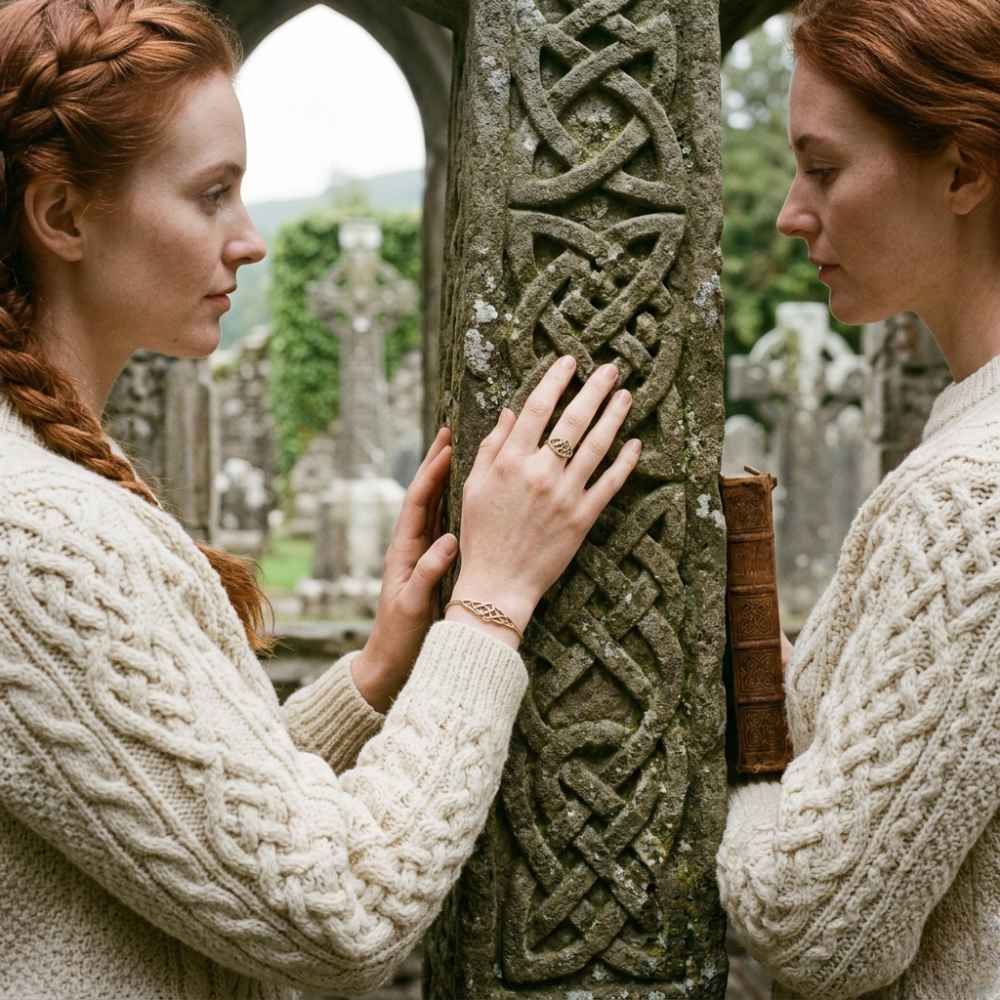
The Celtic Knot originated among the early Celtic peoples of Europe and reached its artistic peak in the Christian monasteries of Ireland. The greatest feature of this motif is its continuous, intertwining lines with "no beginning and no end." From the perspective of traditional totem history and culture, this endless intertwining symbolizes the eternal cycle of life, death, and rebirth, as well as the immortality of the soul and the close connection among all things. In modern clothing, Celtic Knots often appear as exquisite metalwork jewelry, belt buckles, or three-dimensional knits on sweaters (such as the Aran sweater), adding a profound literary atmosphere and a sense of guardianship to an outfit.
2.2 French Fleur-de-lis: A Symbol of Royal Glory and Purity
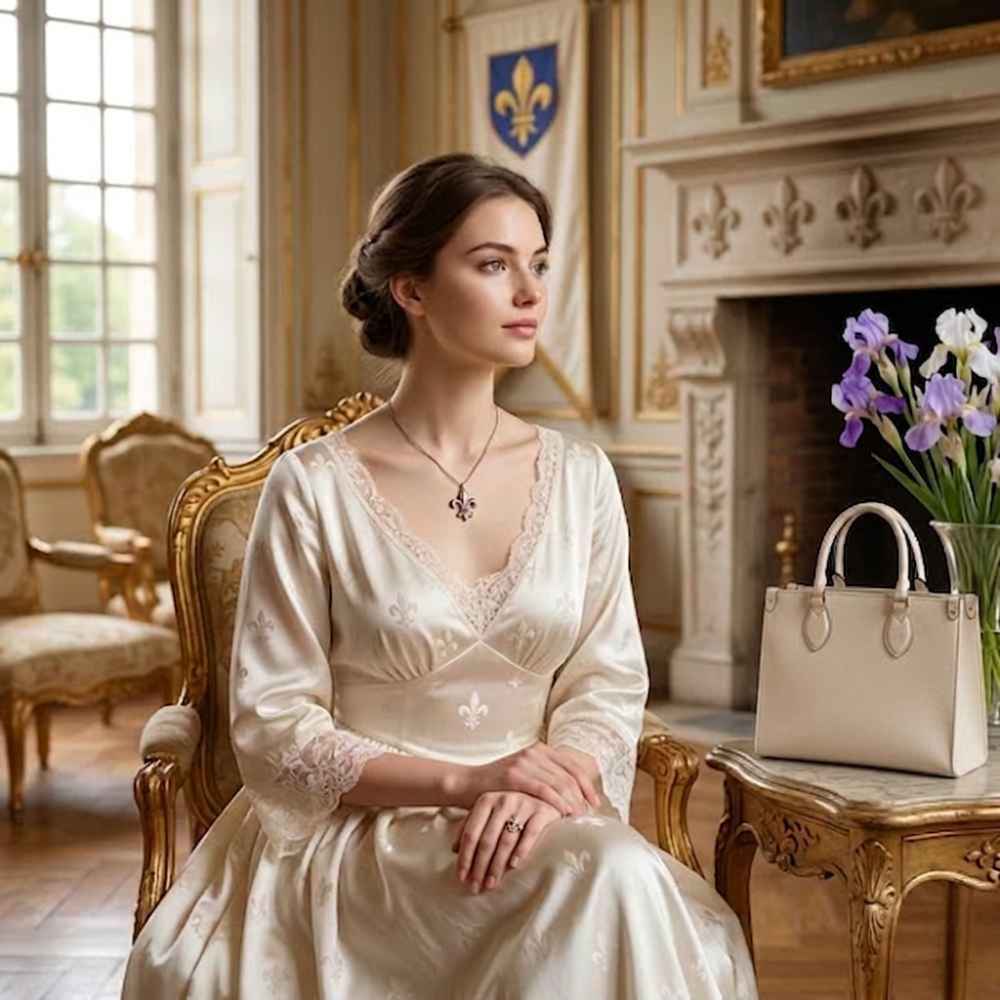
Speaking of French elegance, one absolutely cannot overlook the "Fleur-de-lis" motif. This totem, composed of three petals, has been inextricably linked with the French royalty since the Middle Ages. Legend has it that when King Clovis I of the Franks was baptized, an angel presented him with a lily, and it became a symbol of divine power, light, and purity from then on. Whether on magnificent Baroque court gowns or within the classic monograms of modern French luxury brands, the Fleur-de-lis motif has always maintained its noble and inviolable stance. Incorporating Fleur-de-lis elements into daily outfits can instantly elevate one's overall aristocratic aura and sophistication.
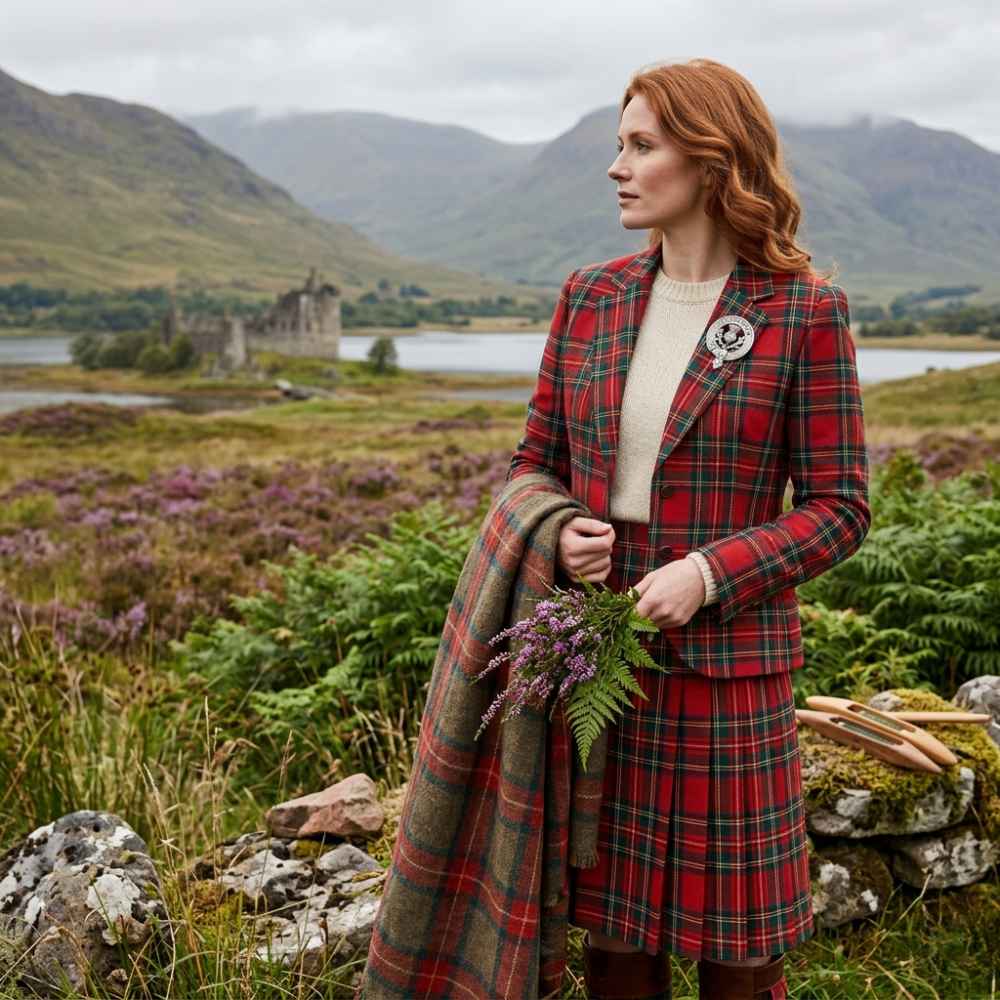
2.3 Scottish Tartan: A Totem of Family Lineage and Earthly Colors
Scottish Tartan is an excellent example of perfectly weaving history and geographical environments into fabric. In the early days, various clans in the Scottish Highlands utilized local plants and minerals as dyes to weave tartans with specific colors and intersecting widths, using them to identify friend from foe and to display family lineage. A famous example is the red-and-green "Royal Stewart Tartan." Today, Scottish Tartan has long crossed clan boundaries to become a shared language of British preppy style and punk culture. It reminds us that behind even the simplest geometric lines, deep family honor and love for the land may lie hidden.
Leaving behind the classical and introspective European continent, our journey crosses the grand ocean to arrive in Africa and the Americas, lands filled with primitive vitality and expressive colors, to explore ancient totems that turn worldviews and natural forces into geometric codes.
3. The Expressive Vitality of Africa and the Americas: Nature Worship and Geometric Codes
The indigenous cultures of Africa and the Americas showcase the purest, most primitive connection between humanity and Mother Nature. Clothing motifs here are mostly composed of vivid, contrasting colors and strong geometric shapes; every shape and every color carries the ancient wisdom of the tribe, mythological legends, and immense reverence for natural forces.
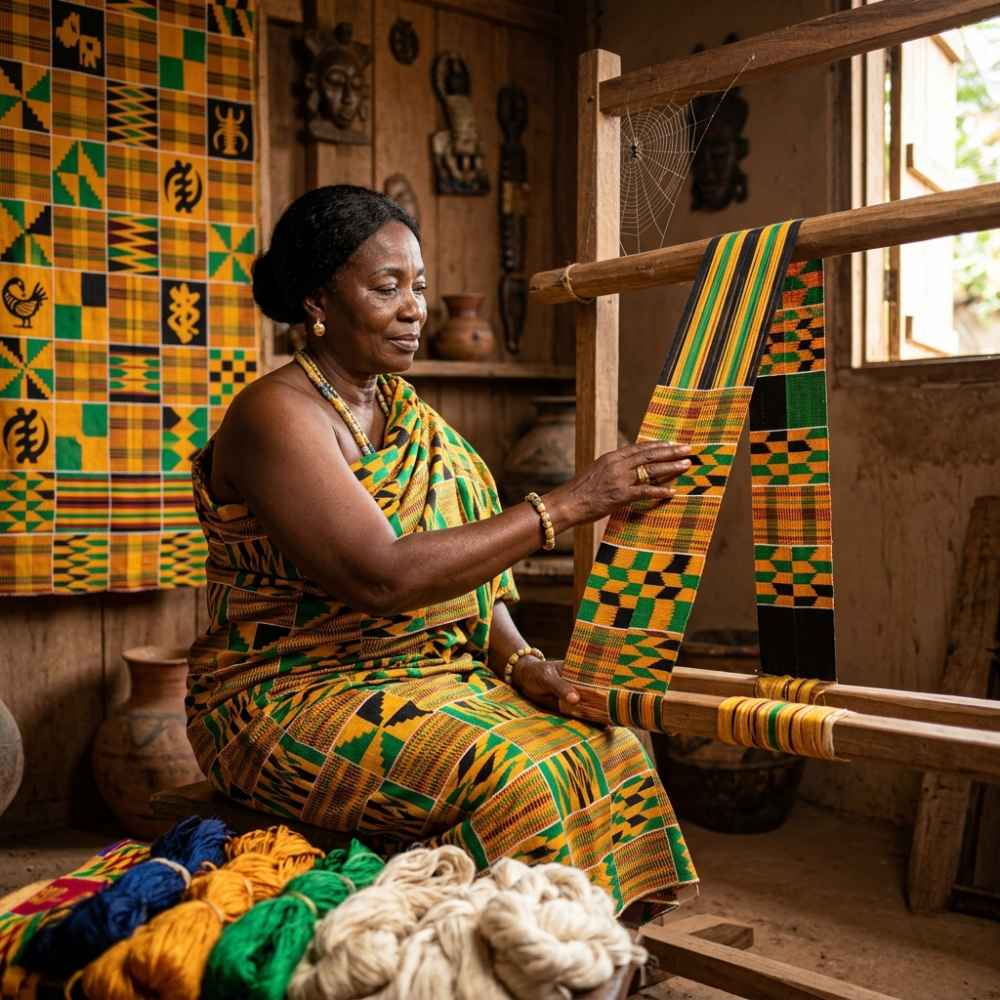
3.1 African Kente Cloth: Proverbs and Status Woven into Fabric
Originating from the Ashanti Kingdom of Ghana in West Africa, Kente cloth is one of the most brightly colored and culturally rich traditional textiles in the world. Legend has it that ancestors learned the weaving techniques of Kente cloth from a spider. Kente is not just fabric; it is more like a visualized collection of proverbs. Every geometric block and color on the cloth has a specific meaning: gold represents wealth and royalty, green symbolizes the land's harvest and growth, and black represents maturity and a spiritual connection with ancestors. Wearing a specific pattern of Kente cloth is a declaration of one's social status and spiritual beliefs to the outside world, showcasing an unparalleled pride in African culture.
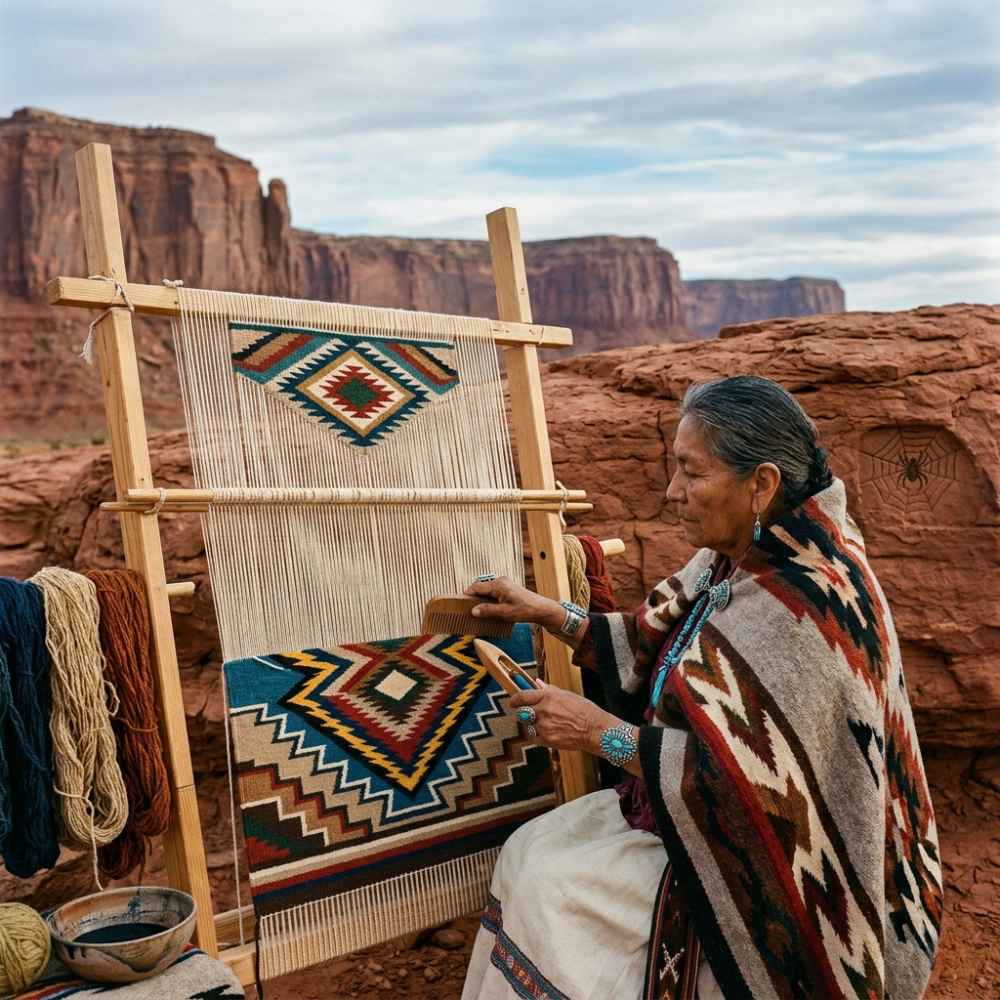
3.2 Navajo Geometric Totems: The Natural Universe View of Native Americans
The Navajo people of North America are world-renowned for their superb weaving craftsmanship. For the Navajo, weaving is not just a handicraft; it is a sacred religious ritual. Legend has it that this skill was taught by the mythological "Spider Woman." Navajo clothing and blanket motifs are mostly composed of diamonds, serrations, and stepped geometric shapes, which respectively represent mountains, lightning, clouds, and the four corners of the universe. These patterns, filled with the earth's energy, have become indispensable exotic styling inspirations in today's bohemian and outdoor styles. Putting on a Navajo totem feels as though one can draw freedom and strength directly from the wilderness.
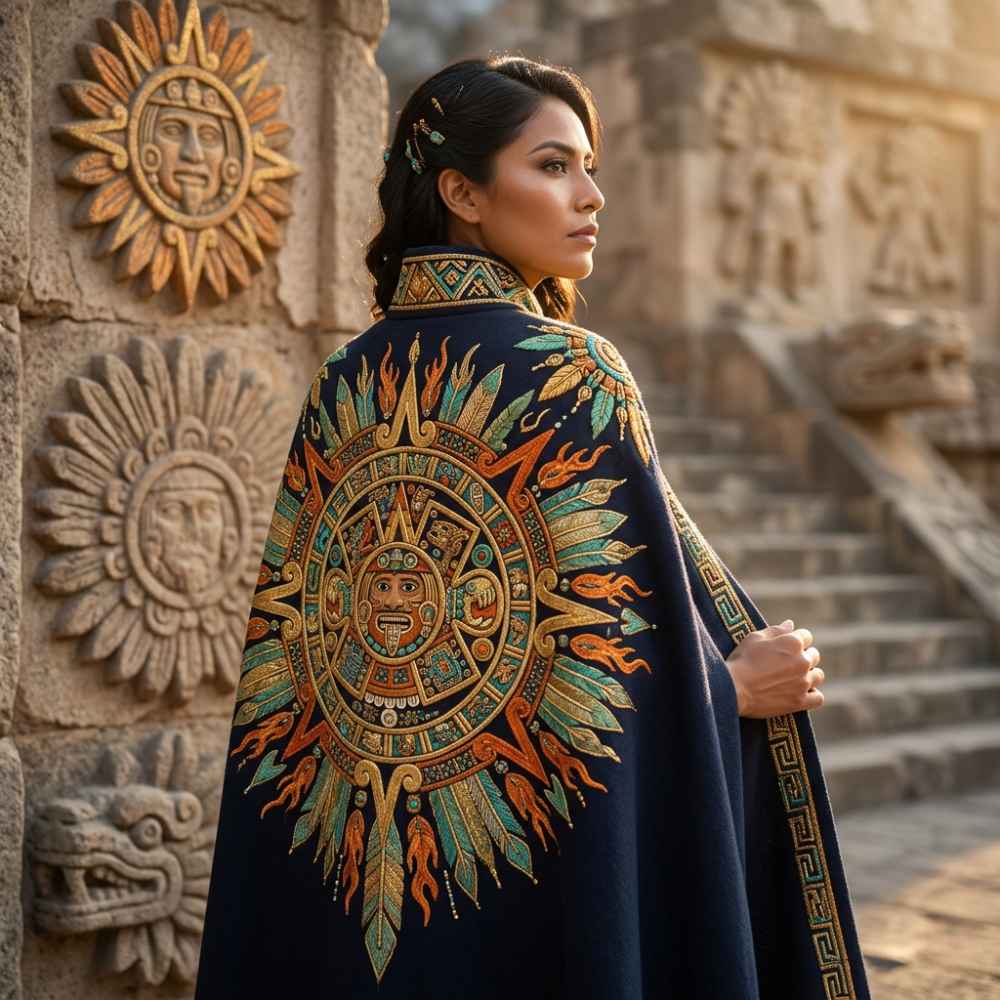
3.3 Mesoamerican Aztec Sun Motif: Reverence and Invocation for the Source of Life
In ancient Mesoamerican civilizations, the Aztecs held a supreme worship for the Sun God. They transformed the sun's trajectory, the cosmic calendar, and sacrifices to the gods into complex, symmetrical, circular radiating motifs. These sun totems, which carried a strong sense of mysticism, appeared not only on magnificent pyramid stone carvings but were also widely applied to the attire of priests and nobles. The sun motif symbolizes the granting of life, the source of power, and infinite energy. In contemporary ethnic designs, the Aztec motif frequently becomes the most eye-catching focus on clothing due to its powerful visual impact.
From the auspicious omens of the East to the glory of the West, and from the proverbs of Africa to the cosmic views of the Americas, now that we understand these totem codes spread across the five continents, how can we elegantly integrate this aesthetic imbued with ancient blessings into our modern daily lives?
4. An Aesthetic Dialogue Bridging Past and Present: How to Incorporate Exotic Styling Inspiration into Modern Life
After understanding the profound meanings of traditional clothing motifs from various countries, the real challenge lies in how to wear these historic totems with a sense of "high fashion" rather than looking out of place, as if wearing a theatrical costume. Integrating traditional elements into modern daily life requires an aesthetic taste that values "quality over quantity" and a clever sense of balance. Here are three practical styling rules to let cultural heritage become the best annotation of your personal style.
4.1 The Accent Method: Utilizing Scarves and Accessories to Display Auspicious Meanings and Symbols
For readers trying exotic totems for the first time, the "Accent Method" is the safest and most sophisticated approach. Instead of covering the entire body in complex prints, it is better to scale down the motifs to accessories. For instance, when wearing a minimalist white shirt or a dark trench coat, tie a neckerchief featuring the Eastern "Seigaiha" or European "Celtic Knot" around your neck, or select an exquisite K-gold necklace engraved with the "Hand of Fatima." Through small areas of accentuation, you can casually showcase your understanding of the auspicious meanings and symbols while adding the perfect finishing touch to monotonous urban outfits, elevating the overall texture and layers.
4.2 The Mix-and-Match Method: The Collision of Traditional Totem History and Culture with Modern Minimalist Tailoring
The highest philosophy of dressing often comes from "conflict and balance." If you want to showcase exotic styles over a large area, the key is in choosing "modern and clean tailoring." For example, you can pick a silk maxi dress printed with a gorgeous "Paisley motif," but pair it with a sharply tailored blazer or a sleek, vegan leather biker jacket on the outside. Alternatively, wear a chunky-knit sweater featuring Navajo geometric totems paired with clean, straight-leg dress pants. This "Mix-and-Match Method," which brings traditional totem history and culture into collision with modern urban silhouettes, can effectively neutralize the dated feel that traditional motifs might carry, creating a personal style that is both modern and full of cultural depth.
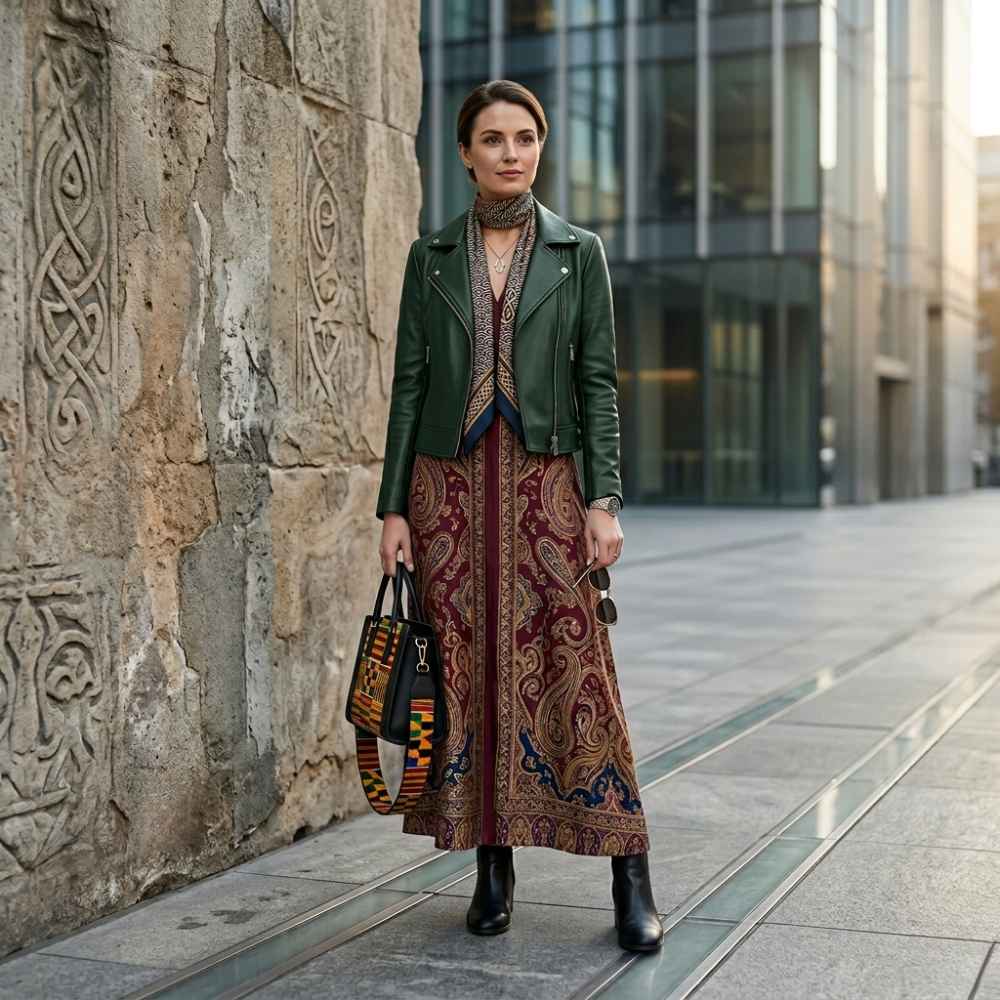
4.3 The Mood Method: Selecting Corresponding Energies Based on the Occasion for Good Luck Attire Recommendations
To some extent, the auspicious motifs on clothing act as our portable "energy fields." The most advanced form of dressing matches the totem's meaning perfectly with the day's occasion and state of mind. For instance, on occasions that require creativity and vitality, you can choose items featuring the bright color elements of African Kente cloth. In moments facing important meetings or when you need to steady your mind, the European Celtic Knot, representing eternity and stability, or the Japanese Seigaiha pattern, praying for tranquility, can bring you a psychological sense of reassuring power. Treating these totems as invisible amulets is not only an excellent list of luck-bringing attire recommendations but also a dressing philosophy filled with wisdom.
5. Conclusion
Traditional motifs on clothing are a world history worn on the body, as well as a collective emotional memory of humanity. From the reproduction of India's Tree of Life and the pure glory of the French royalty to the cosmic codes of Native Americans, traditional clothing motifs from different countries transcend language and borders, weaving humanity's shared desires for happiness, peace, and vitality into every warp and weft thread. When we gaze once more at those beautiful prints in our wardrobes, what we see will no longer be mere patterns but affectionate blessings spanning across time and space. Knowing how to appreciate and style these cultural totems not only displays an exceptional aesthetic taste but is also an elegant tribute to the world's diverse cultures.
Let Aesthetics and Inspiration Become Daily Life:
If you enjoyed this journey of cultural totems across the five continents and yearn to discover more deep aesthetic inspirations and quality lifestyle proposals in your daily life, you are invited to stay tuned to Celestial Cloud's blog. Let us explore more beautiful things above the clouds that illuminate the soul and taste.
References:
1. Schoeser, M. (2003). World Textiles: A Concise History. Thames & Hudson.
2. Rivers, V. Z. (1999). The Shining Cloth: Dress and Adornment That Glitters. Thames & Hudson.
3. Gillow, J., & Sentence, B. (1999). World Textiles: A Visual Guide to Traditional Techniques. Bulfinch Press.
4. Pastoureau, M. (2001). Blue: The History of a Color. Princeton University Press. (Exploring the symbolism of colors and European royal motifs)
Related products
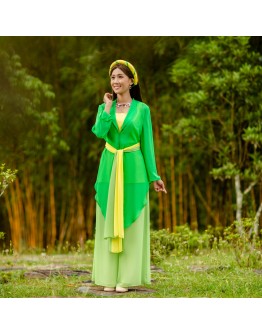
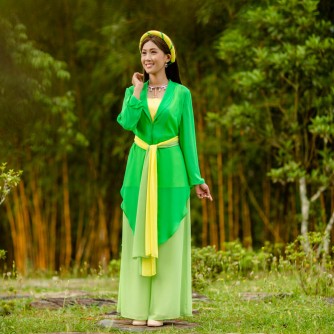
PRODUCT DETAILS Stock ID: A0401 Name: Land of Jadeite Material: Hair accessories, smock, inner vest, double waistband, pants surface cloth: polyester. Pants lining cloth: cotton WEIGHT Subject to shipped product. CARING - Washable, water temperature below 40℃. - Use neutral detergents. - Can spin dry. - Do not bleach. - Do not tumble dry. PURCHASE NOTE *Accessories not included. *Please contact customer service before placing an order. The soft chiffon yarn gives one a beautiful, lively and confident look while you walk! ..
Add to Cart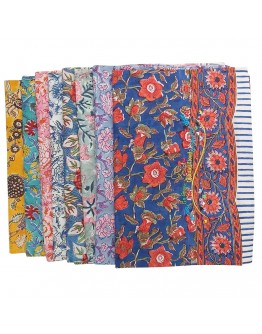
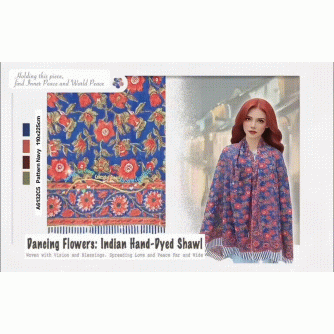
PRODUCT DETAILS Stock ID: A6132 Name: Celestial Cloud Indian Hand Block Printed Cotton Shawl (Quan Yin Cloth) Slogan: Be Veg, Go Green to Save Our World Material: 100% Indian cotton Size: 110cm x 225cm CARING • The fabric is printed and dyed by traditional methods. It is natural for it to discolor when washed. • Hand wash separately using a neutral detergent. Clean gently to protect the delicate fabric. • Dry in the shade. Avoid sun damage to the printing and fabric. COLOR DISCLAIMER Product pictures are taken of the actual product. There may be slight color differences between the photos and the actual product due to the lighting sources and how they are displayed by your monitor or device. Celestial Cloud Indian Hand-Printed Pure Cotton Spring/Summer Quan Yin Cloth Indian Hand-Printed Cotton Cloth — The Ultimate Choice for Meditation Quan Yin Cloth Indian hand-printed cotton fabric is meticulously crafted using traditional techniques, blending artistic beauty with unique patterns and vibrant colors. Its soft, pure cotton texture feels as light and airy as a spring breeze, making it perfect for serene meditation. It can also be transformed into an elegant scarf or shawl, adding a touch of exotic charm and romance to your daily attire. ✨ Craftsmanship Features ✨ ✔ Block Printing - Artisans hand-carve wooden stamps and carefully layer natural dyes to create intricate designs. - Features classic floral patterns such as lotus, vines, and mandalas. - Showcases rich, layered colors such as pink, red, green, turquoise, navy, purple, and yellow. ✔ Tie-Dye Technique - Uses binding, folding, or rolling dyeing methods to create rich color gradients. - Adds harmony and tranquility to meditation spaces. Material and Comfort - 100% Pure Cotton: Skin-friendly, breathable, and soft, suitable for all seasons. - Handmade: Smooth and delicate fabric, each piece is unique. - Superior Quality: More absorbent, durable, and hygienic compared to other fabrics. Eco-Friendly and Natural Dyes - Plant-Based Dyes: Low-chemical, safe, and environmentally friendly. - High Color Fastness: Unique dye-fixing techniques preserve brightness and vibrancy over time. - Reduces environmental impact compared to mechanical production, supporting a more sustainable lifestyle. Suitable Occasions and Styling Tips - Meditation and Mindfulness: Enhances tranquility and creates a peaceful atmosphere for deeper meditation. - Space Decoration: Adds a sacred touch to meditation rooms or personal spaces. - Daily Wear: Wear as a romantic scarf for a soft, ethereal look or as an elegant shawl for effortless, flowing beauty. Fabric Styles A6132D1 Blossom Pink: A soft pink hue paired with delicate floral patterns, exuding warmth and elegance. A6132W1 Floral Red: A rich red base adorned with gold and green accents, capturing traditional Indian charm. A6132W4 Floral Green: Vibrant green motifs, perfect for those who love the essence of nature. A6132D5 Blossom Lake Blue: A refreshing lake blue with intricate floral designs, evoking tranquility and peace. A6132W5 Floral Blue: A deep, serene blue, classic and refined – ideal for creating a meditative atmosphere. A6132C5 Blossom Indigo: A rich indigo shade with delicate hand-printed details, exuding mystery and depth. A6132W6 Floral Purple: A harmonious blend of purple and floral patterns, symbolizing spirituality and mystical beauty. A6131W3 Floral Yellow: A warm, bright yellow base, bringing vigor, joy and positivity. ✨ Whether for meditation, travel, or daily life, owning a piece of Quan Yin cloth filled with artistry and spirituality will illuminate your sacred space and bless each day with enlightenment and beauty. ..
Add to Cart

