
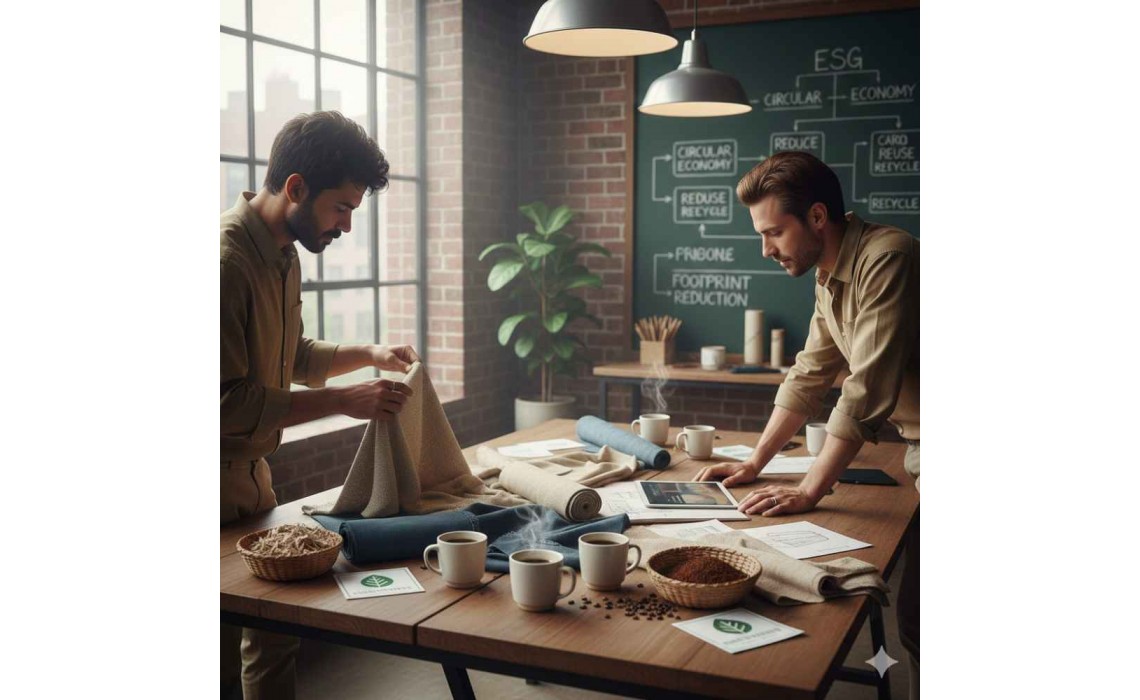
Coffee Ground Recycled Fiber in the Fashion Industry: The Fusion of Eco-Functionality and Design
As sustainable fashion becomes a global trend, more brands are reconsidering the origins of their garments. Among various eco-friendly materials, coffee ground recycled fiber is rapidly emerging as a new focal point for the fashion industry. How can seemingly mundane coffee waste be transformed into high-performance fabric, and why does it simultaneously satisfy environmental, design, and market demands? This article provides an in-depth analysis of the application of coffee ground recycled fiber in the fashion industry, exploring the industrial revolution behind a single cup of coffee.
2. The Pioneer of the Coffee Ground Fiber Industry — Singtex Industrial Co., Ltd.
3. Practical Applications of Coffee Ground Recycled Fiber in Fashion
4. Reasons Why Brands Choose Coffee Ground Recycled Fiber
5. Conclusion: A Cup of Coffee is Rewriting the Future of the Fashion Industry
1. What is Coffee Ground Recycled Fiber? From Waste to Performance Fabric
Coffee ground recycled fiber may sound novel, but it is a concrete realization of the circular economy within the textile industry. Turning waste grounds into fabric goes beyond environmentalism; it endows garments with entirely new functions and value.
Production Principles
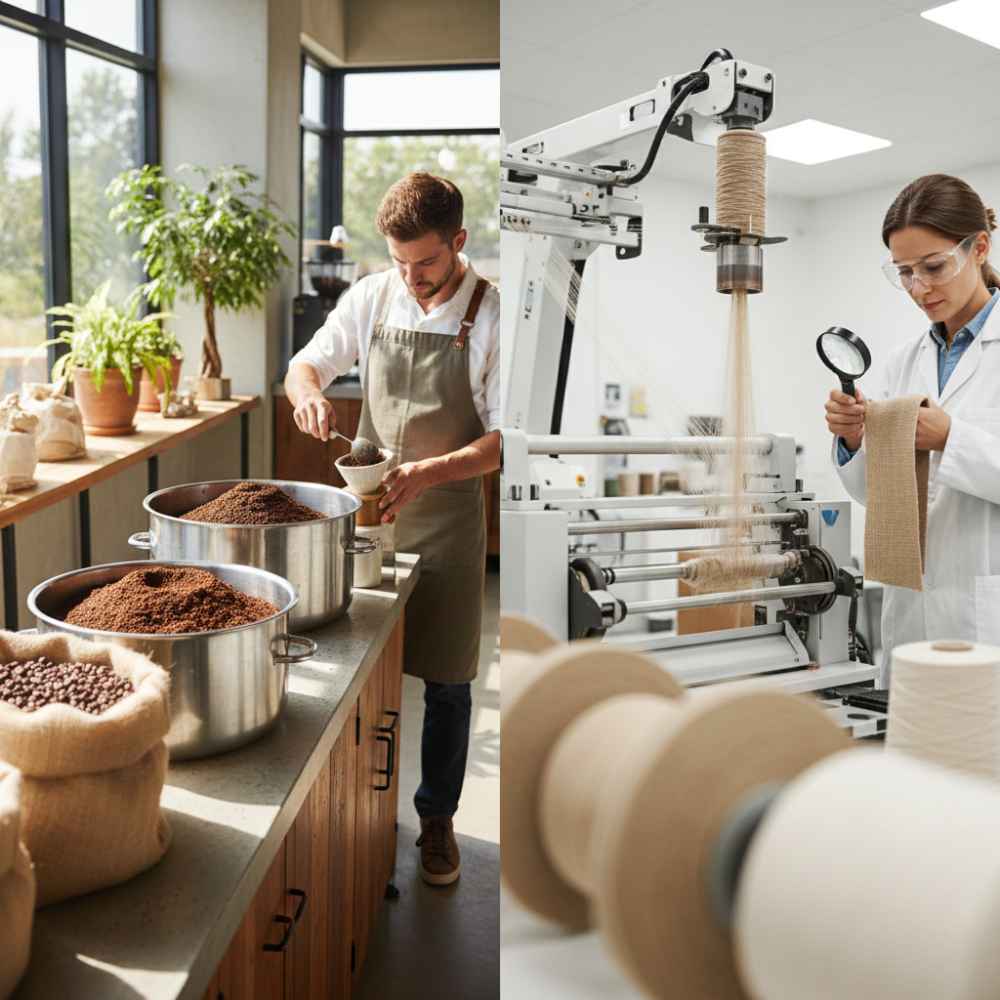
Coffee ground recycled fiber is created by taking used coffee grounds through a process of drying, grinding, and high-temperature treatment, then combining them with recycled polyester (rPET) to be spun into yarn. The naturally porous structure of coffee grounds effectively absorbs odors and regulates temperature, which is the core of the fiber’s unique functionality. Behind this seemingly simple material processing lies ingenious fiber science, allowing coffee grounds to become a functional component of apparel.
Why Can Coffee Grounds Be Made Into Fabric?
Coffee grounds contain natural carbon molecules that, after special treatment, can be stably embedded into the fiber structure. This results in high durability through washing, as well as deodorizing and anti-UV properties. Converting coffee grounds into fiber is one of the most intuitive applications of the circular economy in textiles. Beyond scientific feasibility, the environmental value of coffee fiber is a significant advantage that fashion brands cannot afford to ignore.
Environmental Value
Compared to traditional fibers, coffee ground recycled fiber can:
• Reduce coffee waste
• Lower the usage of petroleum-based raw materials
• Decrease carbon emissions and water consumption
Consequently, it is often regarded as a representative material for sustainable fashion and a vital choice for brands implementing ESG (Environmental, Social, and Governance) strategies. Having understood the principles and value of the fiber, the next step is to look at the pioneer of this technology and how it reached the global market.
2. The Pioneer of the Coffee Ground Fiber Industry — Singtex Industrial Co., Ltd.
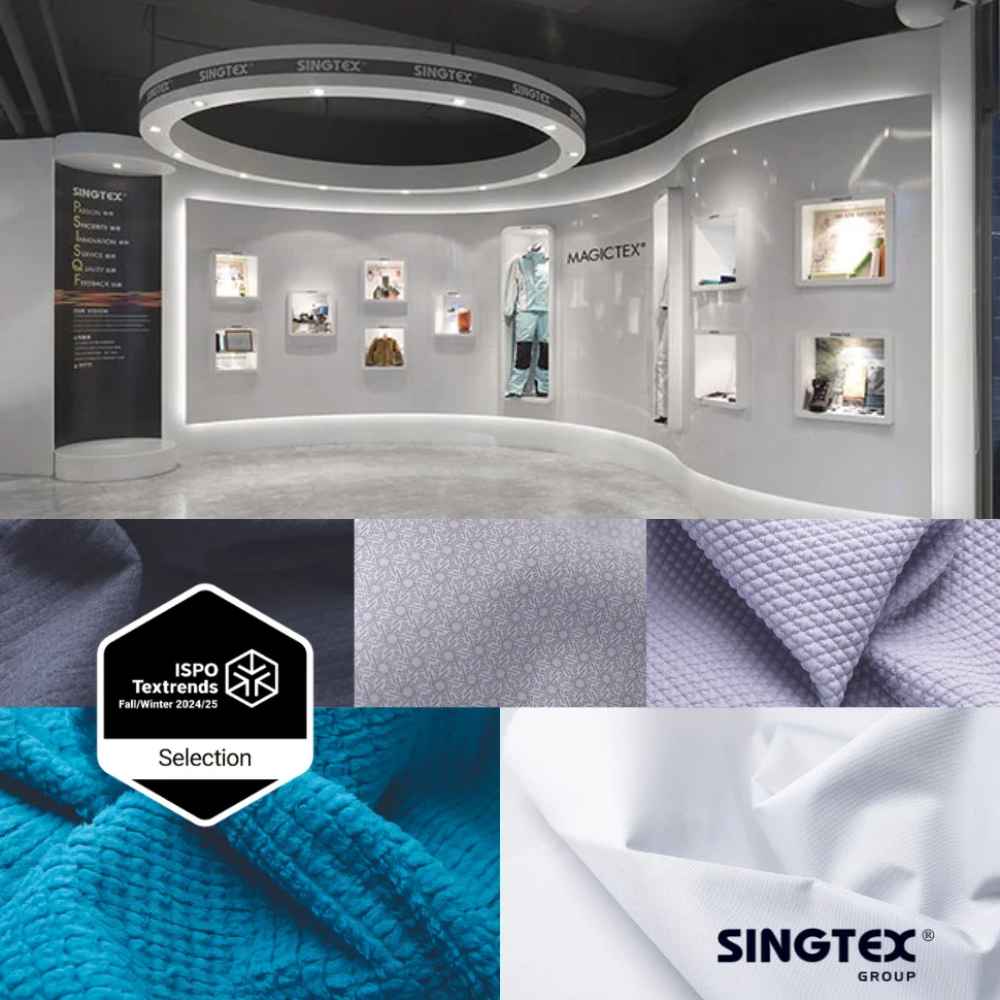
Founded in 1989, Singtex Industrial Co., Ltd. is a Taiwanese brand and a global pioneer in coffee ground fiber technology. Its famous S.Café® technology is one of the world's first commercially available coffee ground recycled fiber technologies.
Technological Development History
In 2009, Singtex took the lead by launching S.Café® coffee yarn technology, combining coffee grounds with recycled polyester to create yarn—a world-first in this type of application.
International Adoption and Brand Collaboration
S.Café® technology has been adopted by over 100 international brands across sports apparel, outdoor clothing, and other sectors. This signifies that Singtex is not only a technical pioneer but also holds significant market influence within the supply chain.
Patents and Awards
The S.Café® technology holds numerous international patents and has received global recognition, including the Taiwan Excellence Award and recommendations from ISPO Textrends, highlighting its leadership in R&D and the market.
Brand Positioning
Singtex positions itself as a global supplier of eco-friendly functional textiles, aiming to be a leader in sustainable materials. Its products are viewed by the outdoor and performance apparel industries as a crucial source of sustainable technology.
3. Practical Applications of Coffee Ground Recycled Fiber in Fashion
Coffee ground recycled fiber has transitioned from experimental concepts to the marketplace, being worn by consumers worldwide. The following brand cases illustrate how it is implemented across different clothing scenarios.
Sports and Performance Apparel
Sportswear and performance apparel are the most mature fields for coffee fiber application.
• Focuses on deodorization, quick-drying, and breathability.
• Ideal for daily wear and light exercise.
These products prove that coffee fiber is more than just an eco-friendly concept; it possesses market acceptance and actual sales power.

Daily Lifestyle Clothing
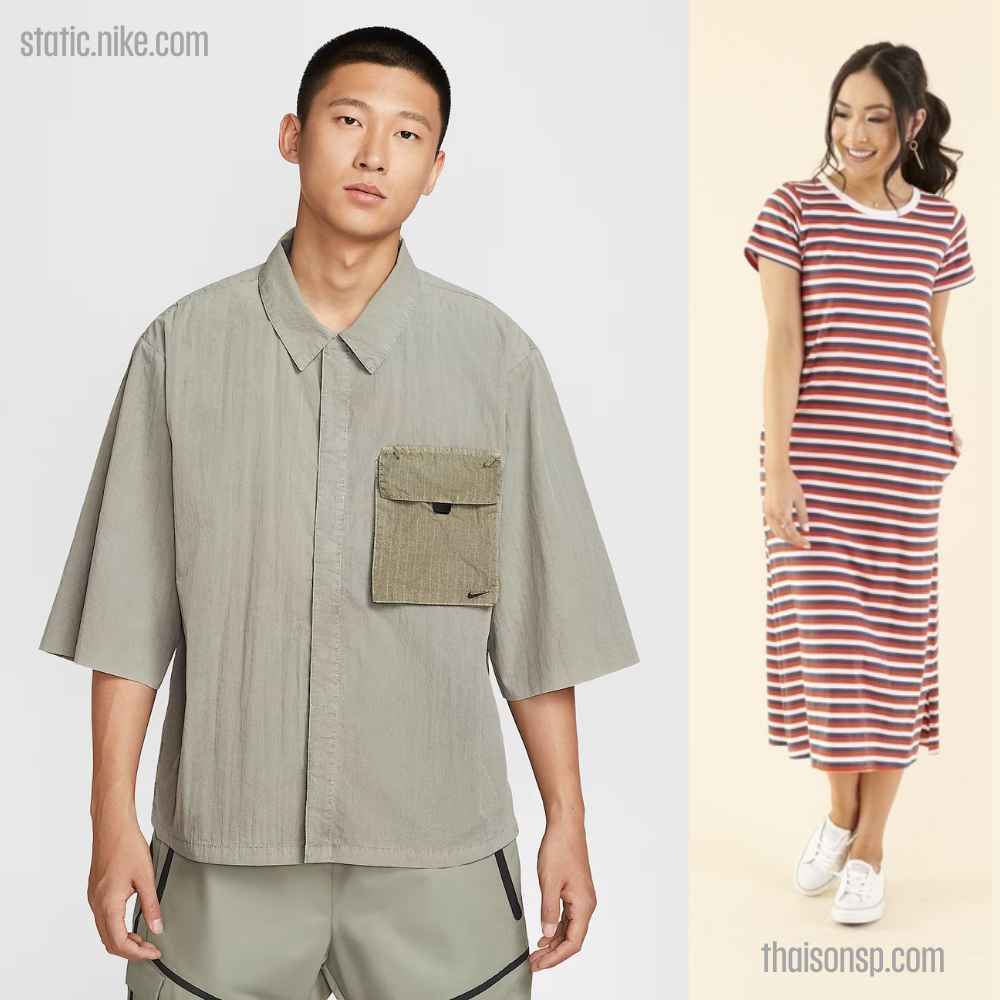
Beyond sportswear, coffee fiber is gradually entering daily lifestyle apparel, bringing sustainable fashion closer to the consumer. When blended with other fibers, coffee fiber becomes softer, more skin-friendly, and closer in feel to standard cotton or performance fabrics.
• Combines coffee ground recycled fiber with plant-based fibers.
• Balances softness, moisture-wicking, and deodorizing effects.
This type of clothing successfully breaks the stereotype that "eco-friendly materials are uncomfortable to wear."
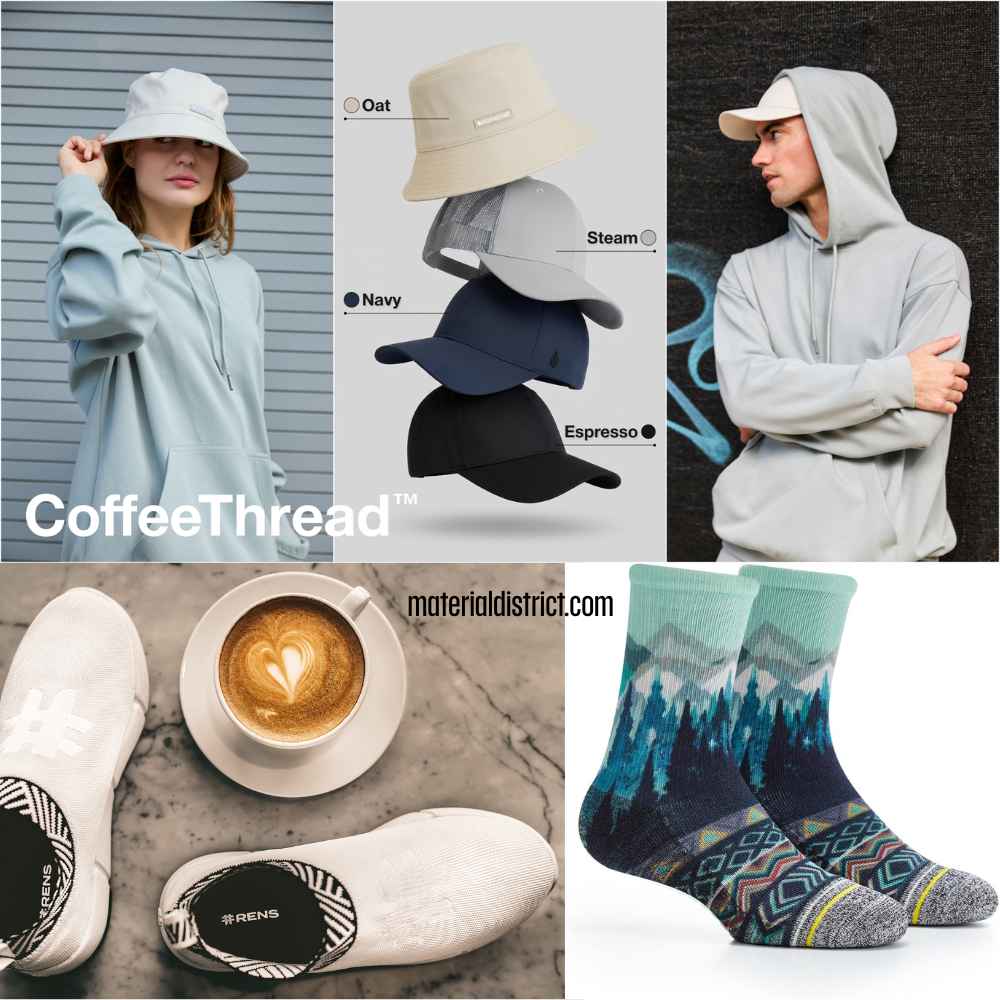
Underwear, Socks, and Accessories
The porous structure of coffee ground fiber is particularly effective at odor adsorption, making it most valuable in intimate apparel and accessories.
• Combines with silver fiber technology.
• Enhances antibacterial, quick-drying, and deodorizing effects.
• Socks (resistant to odors even after long-term wear).
• Hats and scarves.
• Jacket linings and urban functional outerwear.
4. Reasons Why Brands Choose Coffee Ground Recycled Fiber
Meeting Sustainable Fashion and ESG Requirements
By using coffee fiber, brands can clearly demonstrate tangible action toward environmental responsibility rather than relying solely on slogans.
Alignment with Consumer Values
Modern consumers care not just about design, but also about "the impact this garment has on the world." Coffee fiber responds perfectly to value-based demands such as environmentalism, veganism, and low-waste.
Combining Functionality with Design
In the past, eco-friendly materials were often considered "uncomfortable or unattractive." Coffee fiber proves that sustainable materials can maintain excellence in tailoring, color, and functional performance. Taken together, coffee ground recycled fiber is not just an eco-friendly material; it is a possibility for the fashion industry to move toward a sustainable future.

5. Conclusion: A Cup of Coffee is Rewriting the Future of the Fashion Industry
From waste coffee grounds to high-performance fabric, coffee ground recycled fiber proves that design, aesthetics, functionality, and environmental protection can coexist. For brands, it is an innovative material choice; for consumers, it is a more conscious way of dressing. The next time you shop for clothes, check the labels for coffee ground recycled fiber or other sustainable materials—every choice is a vote for the future of the fashion industry.
References
1. Singtex transforms waste coffee into eco-friendly fabrics — Taipei Times
2. S. Café: The fabric from coffee grounds breaking new ground — Fashionating World
3. Coffee Grounds Reconverted into High-Strength Performance Fabrics by S.Café — CommonShare News
4. Ever dreamt of functional fabric made from coffee grounds? — Fibre2Fashion
5. Why Choose S.Café® Coffee Ground Recycled Polyester Fabric? — Fumao Fabric
6. S.Café® Official Website – About S.Café®


