

Create a Sustainable Fashion Lifestyle with Clothes Mending Skills
In the midst of fast-changing fashion trends, we often find ourselves chasing the latest styles, but we are also becoming increasingly aware of the massive environmental impact of "fast fashion." To practice sustainable style, more and more people are choosing earth-friendly ways to extend the life of their clothes. This is especially true for you—if you prefer apparel made from animal-free materials, why not learn some basic mending skills to give every beloved garment a chance at a new life?
This article will take you on an in-depth exploration: Why is mending a crucial step in sustainable fashion? What are some simple and practical repair techniques? Can mending also be beautiful? Let's start by sewing a button, and together, we extend the life of our garments and practice sustainability.
2. Basic Mending Skills: Solving Everyday Problems Yourself
3. Creative Mending Styles: From "Fixing a Hole" to "Making a Statement"
4. A Guide to Sustainable Mending Tools: Eco-Friendly and Practical Choices
5. The Social Significance of Mending: Connection, Heritage, and a Gentle Revolution
6. Conclusion: Mending is Not Just a Skill, It's a Lifestyle
1. Why Mending is the Start of a Sustainable Wardrobe
Reducing Fashion Waste: The Planet Can No Longer Bear the Cost of Fast Fashion
Every year, over 92 million tons of clothing are discarded, many of which have only been worn a few times. This waste has made the fashion industry the world's second-largest polluter. Learning to mend is an act against overconsumption and allows us to re-evaluate the true value of our clothes.
Extending the Lifespan of Materials: Maximizing the Benefit of Sustainable Fabrics
Animal-free materials such as vegan leather, Lyocell, and organic cotton are eco-friendly but often come at a higher cost. By extending their lifespan through mending, we not only reduce the environmental burden caused by discarding clothes but also enhance the meaning and value of these compassionate materials.
The Warmth of Mending: Creating an Emotional Connection with Your Clothes
When you mend a garment by hand, every stitch gives new life to an old piece of clothing. This process of creation and care is no longer just practical; it's an act of respect for our belongings, an investment in our lives, and a gentle response to the environment.
2. Basic Mending Skills: Solving Everyday Problems Yourself
Sewing a Button: Master the "Thread Shank" to Keep Buttons Secure
A lost button is the most common issue. When sewing it back on, remember to start your needle from the back of the fabric. After passing through the buttonholes several times, wrap the thread a few times around the base of the button, between the button and the fabric, to create a small loop of thread known as a thread shank. This will secure the button firmly. Then, tie a knot to finish. The height of the thread shank should generally match the thickness of the fabric; the thicker the fabric, the taller the shank should be, which allows the garment to lie flat when buttoned.

Dealing with Loose Threads: Cut? Pull? Glue? Choose the Right Method to Avoid Making it Worse
If you see a loose thread on your clothes, never pull it! This is especially true for knit or cotton garments, which can unravel easily. The correct method is to snip it flat with a small pair of scissors. If necessary, apply a small amount of fabric glue to the cut end to prevent further fraying.
Small Holes and Torn Seams: Fix Them with the "Backstitch" and "Running Stitch"
For a small hole, you don't need to take it to a tailor. The Backstitch creates tight, strong stitches, making it perfect for repairing seams. The Running Stitch has loose stitches and is suitable for quickly closing small holes. Remember to fold the raw edges of the hole inward before sewing for a neater finish that is less likely to fray.

3. Creative Mending Styles: From "Fixing a Hole" to "Making a Statement"
Visible Mending: The Repair Mark is the Design
Visible mending has become popular in recent years, encouraging people to proudly display their repair work. By using contrasting thread colors, decorative stitching patterns, or even adding embroidered motifs, you're not just mending clothes—you're adding beauty and confidence. A tear is no longer a flaw but a part of the style.
Patching: Covering Blemishes with Fun Designs
Cut a piece of your favorite fabric into a geometric shape, an animal design, or a text slogan, and sew it over a hole. This not only fixes the hole but also adds a playful element. Especially when promoting a vegan message, adding an animal-friendly slogan can turn the act of mending into a gentle form of advocacy.
Sashiko: From Mending to Art, a Repair Craft from Japan
Sashiko is a traditional Japanese technique that uses dense, geometric stitches to reinforce fabric. It's often used on denim, cotton, and linen. It is not only practical but also has a strong design aesthetic, instantly transforming a worn-out garment into a vintage fashion piece.

4. A Guide to Sustainable Mending Tools: Eco-Friendly and Practical Choices
The Basic Toolkit: Needles, Thread, Small Scissors, and a Thimble are Essential
A basic sewing kit at home (with various thread colors), scissors, a thimble, and sewing needles can handle most repair needs. Adding fabric glue and a seam ripper can further improve efficiency and the final look.

Choose Eco-Friendly Tool Materials: Sustainable Threads and Bamboo Tools
In line with sustainable philosophy, choose eco-certified threads like organic cotton or recycled polyester, and biodegradable fabric repair patches. For tools, you can also opt for products made from sustainable materials like bamboo thimbles or wooden-handled scissors.
Recommended Learning Resources: Learn at Your Own Pace
Learning to mend is easier now than ever before. You can use the following platforms and keywords to find tutorials that suit your needs:
• YouTube: Search for keywords like "visible mending," "how to sew a button," "mending torn clothes," or "Sashiko tutorial" to find videos ranging from basic to advanced.
• Pinterest: Search for "mending techniques," "cute and fun patch design ideas," or "Sashiko patterns" to browse inspirational images and step-by-step guides, perfect for visual learners.
• Google Images and Blogs: You can search for "clothes mending tutorial," "hand sewing hole repair," or "fabric mending methods" to find detailed instructions with photos, suitable for those who prefer to read and follow along.
• E-books and Library Resources: Look for keywords like "visible mending," "clothes repair," or "sustainable fashion DIY." Many books on sustainable crafting offer practical examples and stitch diagrams.
5. The Social Significance of Mending: Connection, Heritage, and a Gentle Revolution
Making Mending a Family Culture: Learning to Cherish Through Stitching
Treating mending as a family activity or a household ritual can not only teach children to value their belongings but also create wonderful memories with family. Let every mended piece of clothing become a vessel of love and a testament to shared moments.

A Driving Force for Change in the Fashion Industry: Pushing Brands to Value "After-Care"
As more consumers are willing to mend and cherish their clothes, fashion brands will be forced to address their responsibility for extending a garment's life. Brands like Patagonia and Eileen Fisher have already established repair centers, encouraging customers to love their items for longer and setting a sustainable example for the industry.
Promoting Animal-Free Apparel: Mending is the Most Practical Form of Advocacy
Mending is an extension of the vegan philosophy. When you choose not to discard a garment because of a small hole or flaw but instead pick up a needle and thread to repair it, you are not only avoiding additional purchases and reducing waste but also practicing a form of "non-consumerist fashion." This is not just about cherishing clothes; it's a form of respect for life and the planet.
Furthermore, through creative repairs like visible mending, patching, and Sashiko, you can even embroider animal-friendly slogans or motifs of rabbits and chicks onto old clothes, turning your outfit itself into a silent yet powerful form of vegan advocacy.
Wearing a mended vegan garment is a lifestyle statement: "I choose to be kind to all beings and to this earth." Let mending be more than just a functional craft; let it become a part of your style—honest, gentle, and firm, just like the vegan principles you choose to live by, shining in every moment of your life.
6. Conclusion: Mending is Not Just a Skill, It's a Lifestyle
By mastering the skill of mending, we not only save money but also make our lives more meaningful and aligned with environmental values. Every stitch we make is not just joining fabric but also a gentle promise to the planet. Starting today, instead of easily discarding something, let's learn to mend, giving every item in our wardrobe a chance to continue its journey with us through the seasons of life. Start with your favorite piece of clothing that has a little bit of damage and try one of the mending techniques you learned today!
References
1. Ellen MacArthur Foundation (2021). A New Textiles Economy: Redesigning Fashion’s Future.
2. Patagonia Worn Wear Initiative – https://wornwear.patagonia.com
3. Eileen Fisher Renew – https://www.eileenfisher.com/renew
4. Mending Life: A Handbook for Repairing Clothes and Hearts – Nina & Sonya Montenegro
5. The Art of Visible Mending – https://visiblemending.org
Related products

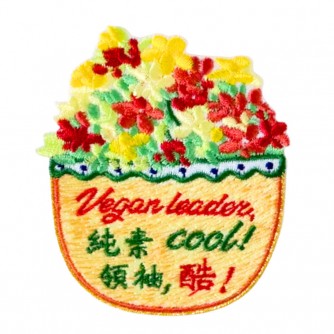
PRODUCT DETAILS Stock ID: P6007 Name: Vegan Slogan Adornment - Vegan Leader Material: polyester fiber Size: Height 8.4cm, Width 7cm Repair the World and Help to Create Eternity In this era of increasing challenges and crises, our most merciful Supreme Master Ching Hai (vegan) is dedicated to saving the Earth. To promote the principles of being vegan, having peace, and repairing the world, She has designed a series of vegan slogan iron-on adornments to awaken humanity’s inner Divinity, elevate the planet, and achieve the noble goal of World Vegan, World Peace. By wearing these adornments, we carry the torch of peace and mend our world with spiritual light. Together, hand in hand, we turn every step into a blessing for our world. ..
Add to Cart

PRODUCT DETAILS Stock ID: P6022 Name: Vegan Slogan Adornment - Vegan Era Material: polyester fiber Size: Height 6cm, Width 6cm Repair the World and Help to Create Eternity In this era of increasing challenges and crises, our most merciful Supreme Master Ching Hai (vegan) is dedicated to saving the Earth. To promote the principles of being vegan, having peace, and repairing the world, She has designed a series of vegan slogan iron-on adornments to awaken humanity’s inner Divinity, elevate the planet, and achieve the noble goal of World Vegan, World Peace. By wearing these adornments, we carry the torch of peace and mend our world with spiritual light. Together, hand in hand, we turn every step into a blessing for our world. ..
Add to Cart

